Vice City came out on October 27, 2002. I was there. Not literally in Miami, but in front of a television, controller in hand, watching the opening cinematic as Tommy Vercetti walked out of a prison and into a pastel suit. That game changed something. Not just for me, but for everyone who played it. It was the game that made GTA feel like a place, not just a playground. And now, 22 years later, Rockstar is taking us back.
The wait has been long. Absurdly long. Longer than any fan in 2002 could have imagined. We went through two console generations, two numbered GTA games, two Red Dead games, one Max Payne, and an entire online mode that became its own economy before Rockstar decided it was time to return to the palm trees and the neon. The question is why. Why did it take 22 years? And was the wait worth it?
Vice City in 2002: what happened
GTA 3 launched in October 2001 and proved that open-world 3D crime games could work. It sold 17.5 million copies and turned Rockstar from a successful studio into a cultural force. Vice City launched 13 months later, in October 2002, and it did something GTA 3 did not do. It gave the open world a soul.
Vice City sold 17.5 million copies on PS2 alone. It became the best-selling game of 2002 in the United States. It won Game of the Year from multiple outlets. It was the game that everyone was playing and everyone was talking about, and the reason was not the mechanics. The mechanics were barely evolved from GTA 3. You drove, you shot, you ran missions. The difference was the world.
Vice City was set in 1986 in a fictional Miami. It had two main islands plus a beach area, connected by bridges. The map was small. You could drive from one end to the other in a few minutes. But size was never the point. The point was that every corner of that map had a specific mood, a specific color, a specific song playing on the radio. Vice City felt like being inside a movie. Not a bad movie. A great one.
What made Vice City special
Start with the music. Vice City had nine radio stations, and the soundtrack was built from real licensed 1980s tracks. Flash FM played Michael Jackson, Hall and Oates, and Kim Wilde. V-Rock played Ozzy Osbourne, Iron Maiden, and Twisted Sister. Wave 103 played Flock of Seagulls and Human League. Emotion 98.3 played Foreigner and Chicago. Each station was curated to evoke a specific feeling, and the feeling was the 1980s filtered through nostalgia even for people who had not lived through them.
The soundtrack was not background music. It was world-building. You stole a car, a station came on, and the station told you where you were. Steal a lowrider and you might get Fever 105 playing Kool and the Gang. Steal a sports car and V-Rock kicks in with Judas Priest. The radio was the emotional soundtrack to your experience, and it worked because every track was chosen to match the setting’s mood. I still hear “Billie Jean” and think about driving down Ocean Beach at sunset in a stolen Cheetah.
Then there was the setting itself. Vice City was unapologetic about its influences. The game was Scarface (1983) and Miami Vice (1984-1989) mashed together and turned into a playground. The mansion you buy late in the game is a direct reference to Tony Montana’s estate. The opening deal that goes wrong is a Scarface scene. The pastel suits, the flamingos, the convertible cars, the neon lights on Ocean Drive, the boats in the marina. It was 1980s Miami as a fever dream, and it committed to the bit completely.
Tommy Vercetti was the other ingredient. Voiced by Ray Liotta, Tommy was the first GTA protagonist who felt like a character rather than a blank avatar. He had a voice. He had opinions. He got angry. He cracked jokes. He was a guy who had spent 15 years in prison and came out with a chip on his shoulder and a plan to build an empire. Ray Liotta’s performance was a game-changer. The voice acting in Vice City, across the board, was a level above anything GTA 3 had attempted. Tommy’s supporting cast included Lance Vance (voiced by Philip Michael Thomas from Miami Vice), Ken Rosenberg (a coked-up lawyer voiced by William Fichtner), and Sonny Forelli (Tommy’s boss back in Liberty City). These were people you remembered. They had personalities. They had arcs.
The 80s aesthetic was the glue. Neon pink and turquoise. White suits with pink shirts. Convertible cars with the tops down. Flamingos on lawns. Art deco buildings on the beach. The whole game was drenched in a color palette that said “Miami 1986” so loudly that you could see it with the sound off. No game before or since has committed so fully to a visual identity. GTA 5 looks great but it looks like modern Los Angeles. Vice City looked like a feeling.
Why Rockstar moved away from Vice City
After Vice City, Rockstar did not go back. They went to San Andreas in 2004 (a fictional California/Nevada in the early 1990s). Then GTA 4 in 2008 (Liberty City, modern day, dark and grounded). Then GTA 5 in 2013 (Los Santos, modern day, satirical and sprawling). Then Red Dead Redemption 2 in 2018. Each game was in a different place and time. Vice City was left behind.
There were practical reasons. Vice City’s map was small. It was designed for the PS2, with load times between islands and a fraction of the detail that modern games demand. You could not just take Vice City and make it bigger. You had to rebuild it from scratch, and rebuilding a city that iconic is risky. Every fan has a version of Vice City in their head. If the new one does not match that version, the disappointment could be enormous.
There were also creative reasons. Rockstar likes new settings. Dan Houser, who co-founded Rockstar and wrote the GTA games through GTA 5, said in interviews that the team likes to move to new places rather than revisit old ones. Each GTA is a new world, a new cast, a new tone. Liberty City in GTA 4 was deliberately different from Liberty City in GTA 3, darker and more realistic. Los Santos in GTA 5 was deliberately different from San Andreas, more satirical and more contemporary. Going back to Vice City would mean breaking that pattern.
There was also the question of when. Vice City worked because it was a period piece. The 1980s setting was the whole point. If Rockstar went back to Vice City, would they set it in the 1980s again, in which case it is a remake, or in the present day, in which case it loses the period charm? That question sat unanswered for over a decade. The answer they eventually arrived at is present day, and it is the right answer, but it took them a long time to get there.
Two decades of fan demand
The fan demand for a Vice City return was constant. For 20 years, every time Rockstar announced a new game, a portion of the fanbase hoped it would be Vice City. Every E3, every rumor, every leak. “Is it Vice City?” was the question that never went away.
The demand was visible everywhere. Fan forums, Reddit threads, YouTube speculation videos, mockup trailers. People made entire GTA 5 mods that converted Los Santos into a Vice City approximation, just to scratch the itch. The “Vice City” tag on GTA 5 mod sites had thousands of downloads. Fan-made trailers imagining a modern Vice City accumulated millions of views. The desire was not niche. It was the single most requested setting in the GTA community.
Rockstar knew. They had to know. You do not run a gaming studio in 2015 and not notice that your fanbase is begging for Vice City. But Rockstar is not a studio that rushes. They take their time. They release a game when it is ready, and they define “ready” on their own terms. The gap between GTA 5 and GTA 6 is 13 years. That is the longest gap between mainline GTA games in the series’ history. Rockstar spent those years on GTA Online, on Red Dead Redemption 2, on building the technology and the team and the story they needed for GTA 6.
I think the long wait was a good thing for Vice City’s return. If Rockstar had gone back in 2015 or 2016, they would have been working with PS4-era technology. The game would have looked like GTA 5 with palm trees. By waiting until the PS5 generation, they can build a Vice City that feels like a real city, with the density and detail and lighting that modern hardware allows. The wait was painful, but the version of Vice City we are getting in 2026 is the version that only this generation of hardware can produce.
How the 2026 version modernizes the setting
The biggest change is time. Vice City in 2002 was set in 1986. GTA 6 is set in the present day. There is no pastel suit. There is no Scarface mansion on a hill. The 80s are gone.
What replaces them is a modern Florida that is in some ways more absurd than the 80s version. Social media. Influencers. Crypto scams. Prescription drug abuse. Climate change making the hurricanes worse. A political landscape that is genuinely unhinged. The 2026 Vice City is not a period piece. It is a present-tense satire of a state that has only gotten weirder since 1986.
The music situation is different too. In 2002, the radio stations played 80s hits because the game was set in the 80s. In 2026, the radio stations play modern music, and the cultural function of the radio has changed. In 1986, the radio was how you heard new music. In 2026, the radio competes with streaming and algorithms and TikTok. Rockstar has to figure out what music means in a world where everyone has a phone and a playlist. I expect the in-game radio to still be great, but I also expect social media and in-game apps to carry some of the cultural commentary that the radio used to carry alone.
The setting is bigger. Vice City in 2002 was a few square kilometers. GTA 6’s Leonida is a whole state. Vice City is in it, but so is the Grassrivers wetland, which is Rockstar’s own name for the Everglades equivalent, plus rural towns, other named regions, and a vast expanse of Florida geography. The scope is not just bigger in terms of square miles. It is bigger in terms of variety. You are not just in a city. You are in a state, with different ecosystems, different economies, and different kinds of people.
What stays the same
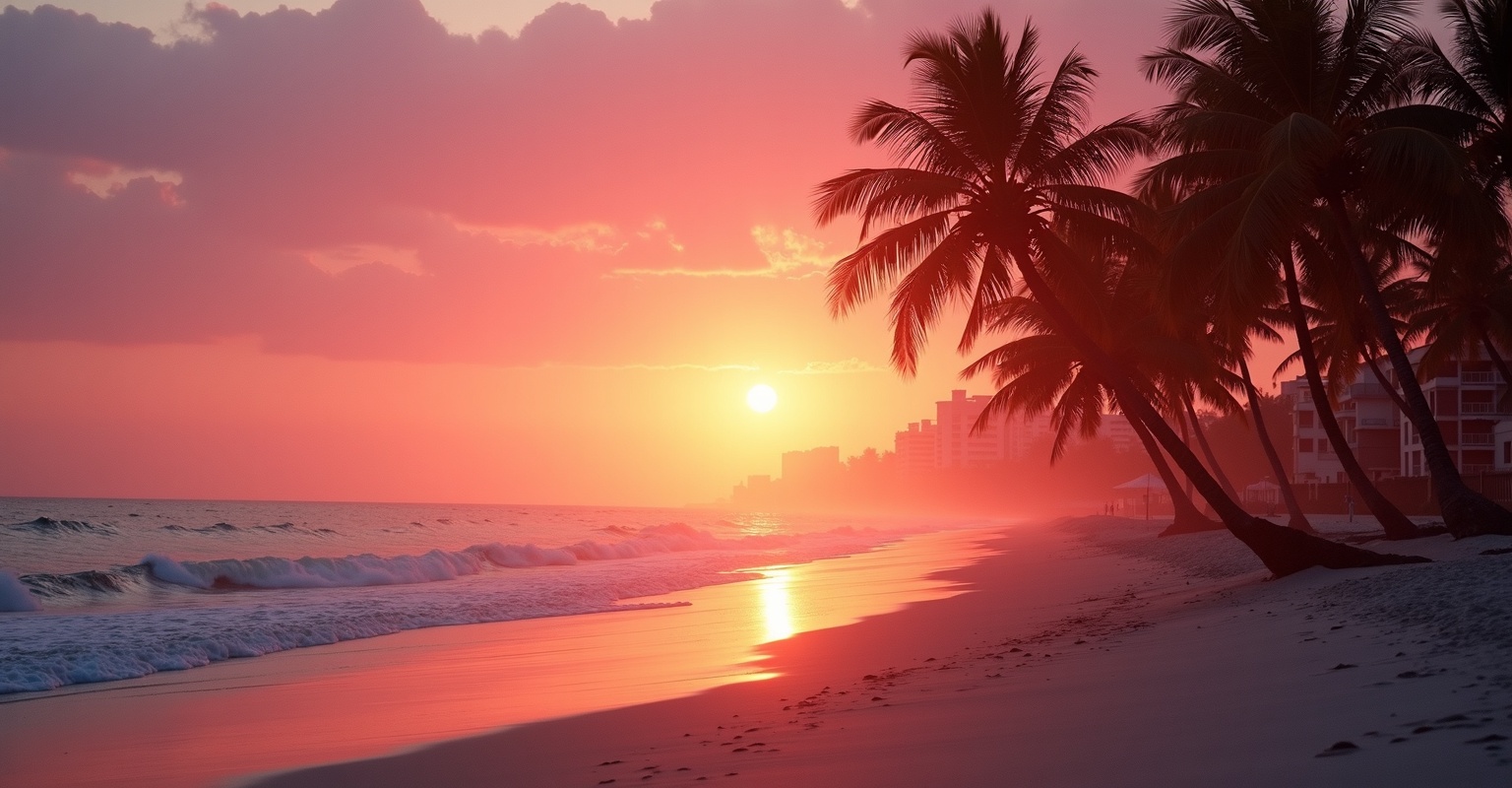
For all the changes, some things are permanent. Vice City without beaches is not Vice City. GTA 6 will have the beaches, the ocean, the causeways, the boats, the sun. The color palette will still lean warm. The neon will still be there, even if it is LED neon now instead of glass tube neon. The palm trees will still sway. The thunderstorms will still roll in at 3 PM and dump rain for 20 minutes before the sun comes back.
The crime will still be the core. Vice City was always about building a criminal empire in a city that runs on money and vice. GTA 6 will be about the same thing, updated for a world where crime looks different but the motivations (money, survival, love, desperation) have not changed.
The sunshine is the thing I am most curious about. Vice City in 2002 was bright. Genuinely bright. The lighting engine was basic, but the art direction committed to a sun-drenched look that made the game feel warm even on a CRT television. Modern lighting engines can do things with sunlight that were impossible in 2002. The way light filters through palm fronds. The way neon reflects on wet streets after a rainstorm. The way the sky turns orange at sunset over the ocean. If Rockstar nails the lighting in GTA 6, and based on the trailers they have, the Vice City of 2026 will be the most beautiful setting the series has ever produced.
Comparing the 2002 map to what we expect in 2026
The 2002 Vice City map was roughly 5.3 square kilometers. For context, GTA 5’s map is about 75 square kilometers. GTA 6’s map, based on what Rockstar has shown and what the community has estimated from trailer analysis, appears to be significantly larger than GTA 5’s. We are talking a whole state, not just a city.
The 2002 map had two main landmasses: Vice City Mainland and Vice Beach, plus a smaller island and an airport. The layout was simple. You could learn the map in an afternoon. Every road, every shortcut, every hidden package location was memorizable.
The 2026 version is not just bigger. It is organized differently. Instead of a single city on an island, Leonida is a state with multiple population centers. Vice City is the biggest, but there are other towns, rural areas, and natural spaces. The 2002 map was a city. The 2026 map is a world.
What I expect to see carried over from the 2002 map is the feeling of Vice City itself. Ocean Drive with its art deco buildings. The beach. The marina. The downtown skyscrapers. The airport. These were the landmarks that defined Vice City in 2002, and I expect Rockstar to include modernized versions of them in 2026. The names may change. The layout will definitely change. But the landmarks that made Vice City feel like Vice City need to be there, and based on the trailers, they are.
The scale difference is going to be the biggest shock. In 2002, you could drive from one end of Vice City to the other in about two minutes. In 2026, driving across Leonida could take 15 or 20 minutes. That changes the experience. In 2002, the world was intimate. You knew every street. In 2026, the world will be vast. You will know some areas well and others not at all. That is a different kind of relationship with a map, and it is one that GTA 5 proved Rockstar can handle.
The emotional weight of returning after 22 years
Here is something I have not seen anyone talk about. The emotional experience of going back.
If you played Vice City in 2002, you were probably a kid or a teenager or a young adult. You are now in your 30s or 40s. Your life is different. Your relationships are different. Your relationship with games is different. You are not the same person who stole a Cheetah and drove it down Ocean Beach with “Self Control” playing on Flash FM.
Going back to Vice City in 2026 is going to feel strange. Not bad strange. The kind of strange where you recognize a place but it has changed, and you have changed, and the gap between who you were and who you are is visible in the distance between the 2002 Vice City and the 2026 one.
I think this is going to be one of the most powerful things about GTA 6. Not the graphics. Not the missions. The feeling of returning to a place you have not been in 22 years and finding it both familiar and new. The beaches are still there but they are different beaches. The neon is still there but it is a different kind of neon. The crime is still there but it is a different kind of crime. The place is the same and not the same, and so are you.
Rockstar has to know this. They have to know that a portion of their audience has been waiting 22 years for this, and that the return is going to carry emotional weight that no other GTA release has carried. GTA 5 was a new place. GTA 4 was a new place. Red Dead 2 was a new place. GTA 6 is an old place made new, and that is a fundamentally different experience.
I expect the first hour of GTA 6 to be overwhelming for longtime fans. Not because of the graphics or the gameplay. Because of the recognition. The moment you see the Vice City skyline for the first time. The moment you drive down a beach road and the palm trees go by. The moment you hear the first notes of a song on the radio. Those moments are going to hit different because you have been waiting for them for two decades.
Will the old soundtrack return
This is the question I get asked most when I talk about GTA 6 with people. Will the 80s music be back?
The answer is complicated. GTA 6 is set in the present day, so the radio stations will primarily play modern music. Rockstar has always matched the soundtrack to the setting. Vice City in 1986 played 80s music. San Andreas in 1992 played 90s music. GTA 5 in 2013 played 2010s music. GTA 6 in the 2020s will play 2020s music. That is the pattern, and Rockstar has never broken it.
But here is the thing. Vice City’s music is so iconic, so tied to the identity of the place, that I cannot imagine Rockstar ignoring it entirely. My expectation is that one or more radio stations in GTA 6 will be a classic station, playing 80s hits as a nod to the original game. Think of it as the in-game equivalent of a city having an oldies station. The 80s music is Vice City’s heritage. It would be strange for a city with that heritage to not have a station playing it.
I also expect some of the original Vice City radio personalities or station identities to return in updated form. Lazlow Jones, who wrote and voiced radio content for every GTA from GTA 3 through GTA 5, left Rockstar in 2020. So do not expect Lazlow himself. But the spirit of those stations, the satirical ads, the fake talk shows, the DJ banter, that will all be back in a modernized form.
The soundtrack matters because it was half of what made Vice City special. The game without the music is still fun. But the game with the music is something else. It is a time machine. And even if GTA 6 cannot be a time machine (it is set in the present, after all), the moments where the old music surfaces, where a familiar song comes on and you are suddenly 15 years old again, those moments are going to be some of the best in the game.
The wait was worth it
I am going to make a call. The 22-year wait was worth it. Not because waiting is virtuous or because patience is a virtue. Because the Vice City we are getting in 2026 is better than any Vice City we could have gotten sooner.
A 2015 Vice City would have been a PS4 game. It would have looked like GTA 5 in Florida. It would have been good, probably. But it would not have been what GTA 6 is going to be. The lighting technology alone, the ray-traced reflections on wet streets, the way the sun moves across a city that is dense enough to feel real, that technology did not exist in 2015. The map density, the NPC AI, the social media systems, the dual protagonist structure, none of that was possible then.
Rockstar waited until they could build the Vice City that the original deserved. The 2002 game was a sketch. A brilliant sketch, but a sketch. The 2026 game is the painting. It is the full realization of what Vice City was always supposed to be, built with 22 more years of technology, 22 more years of open-world design experience, and 22 more years of cultural material to satirize.
The fans who have been waiting since 2002 are going to have a strange, powerful experience when they load up GTA 6 for the first time. It will feel like coming home to a house that has been remodeled. The bones are the same. The walls are in the same place. But everything is new, and the newness is beautiful, and you can see what the original was always trying to be if it had only had the tools.
Vice City was never gone. It was just waiting. And so were we.